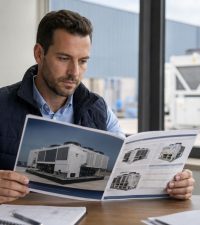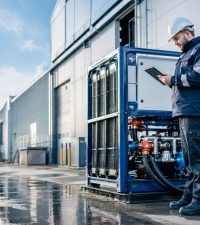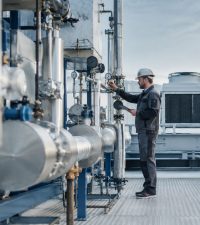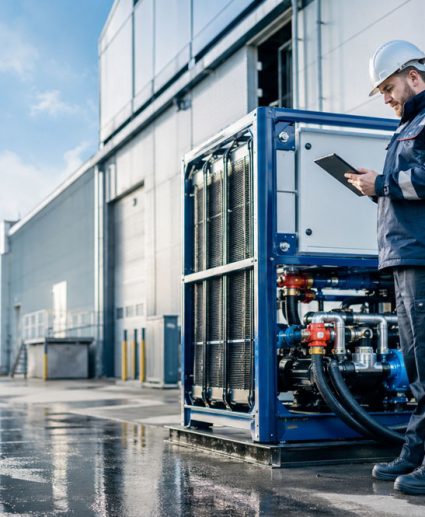




Deploying skid-mounted or containerized heating units from 3 to 800 kW makes it possible to maintain continuity of service during a breakdown or scheduled maintenance. An interruption of heat supply in an industrial process or a delay in screed drying can lead to heavy operating losses.
This article explains how a temporary replacement boiler works and analyzes the technical criteria for an efficient hydraulic connection to your installations. Let’s take a closer look at these self-contained solutions.
Contents
How a temporary replacement boiler works and its technical principles
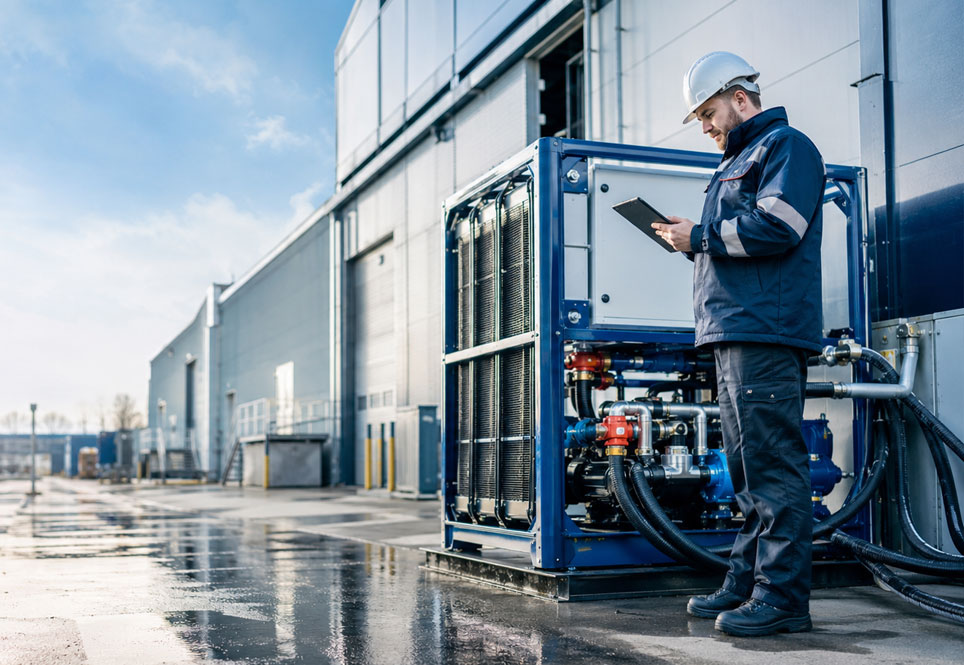
Stamex deploys mobile units from 3 to 800 kW on skids or in containers, which can be connected within a few hours using high-pressure hoses to ensure industrial heating continuity or screed drying.
This responsiveness is based on a technical architecture designed for autonomy and rapid integration into existing networks.
Architecture of the self-contained system on skid or in a container
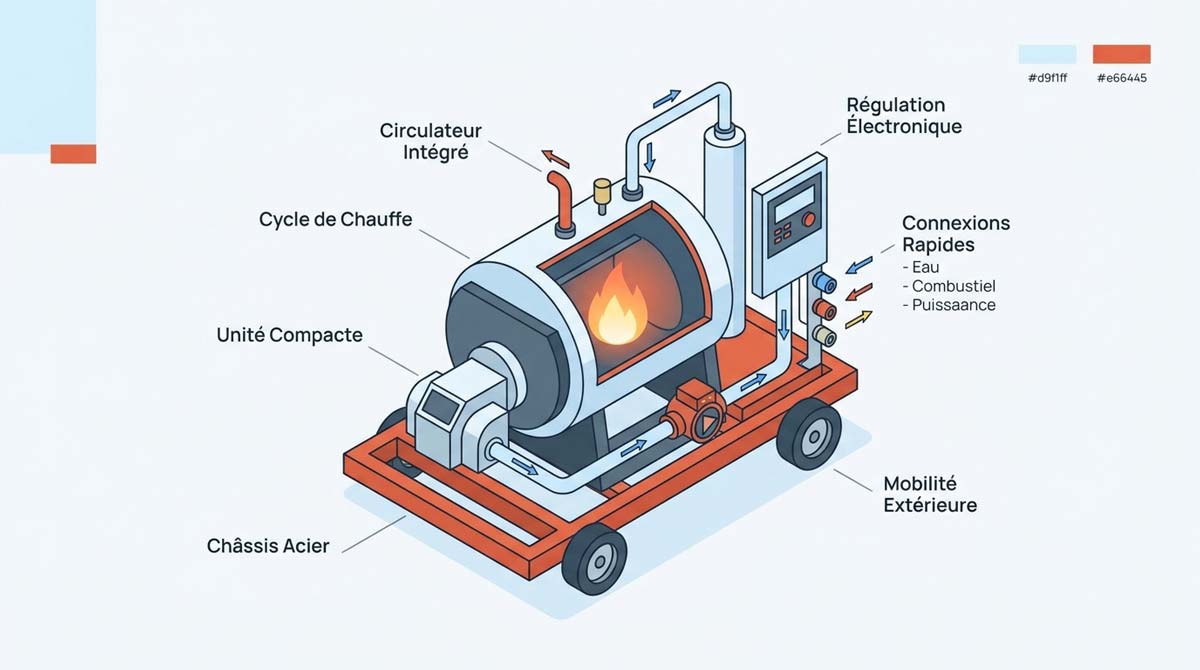
The compact unit combines the burner, the heating body and the circulator. Everything is pre-assembled on a sturdy steel frame. This structure ensures optimal protection of the internal components.
Full mobility allows outdoor installation to free up space. The container effectively withstands bad weather. Operational deployment thus becomes almost immediate on any site.
The plug-and-play design offers accessible connection points. This drastically reduces downtime at your site in Belgium. Efficiency is maintained without heavy structural modifications.
How thermal energy is produced and distributed
The internal heating cycle converts energy. Heat comes from electric heating elements or a high-performance oil/gas burner. Heat transfer to the heat transfer fluid is instantaneous.
The built-in circulator plays a central role. This pump ensures the necessary flow to your existing heating installations.
Controlling flow and pressure guarantees even heat distribution, which is essential for the stability of the most sensitive industrial processes.
Electronic controls manage the entire system. The temperature remains constant and safe. You avoid any risk of overheating or service interruption.
Contact our experts for a customized study of your heating needs.
4 situations that call for renting a temporary boiler room
Beyond the technical aspects, these mobile units meet critical business continuity needs.
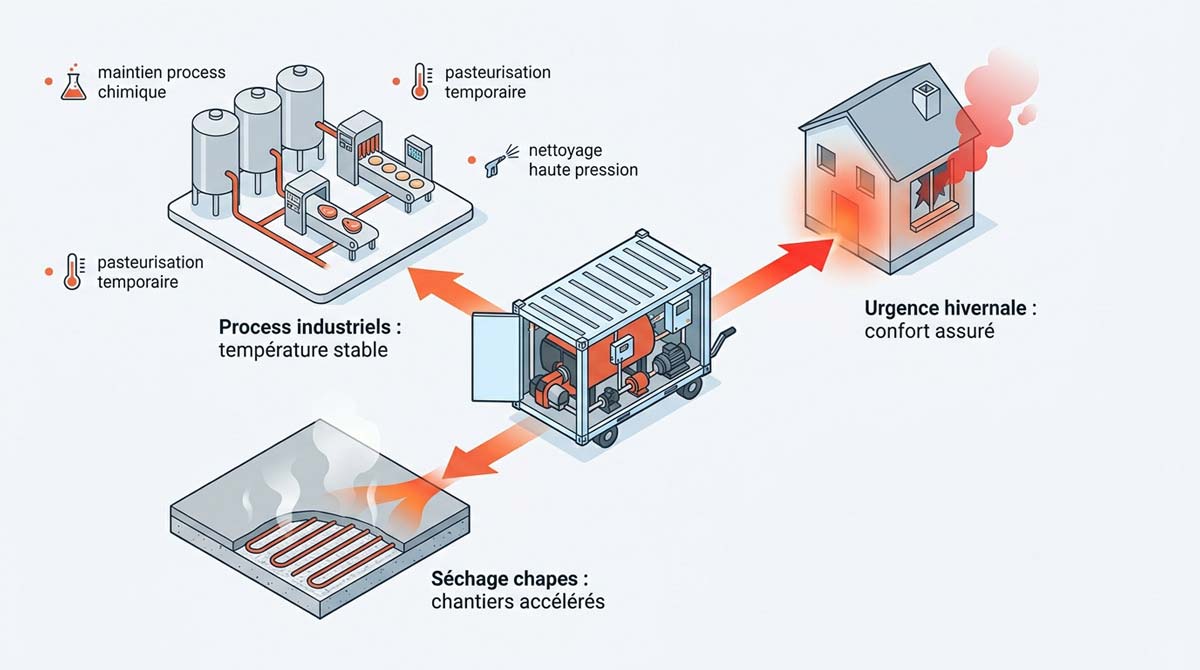
Covering an urgent breakdown or maintenance of a permanent boiler room
A winter breakdown requires an immediate response to protect the building. Rental makes it possible to maintain occupant comfort in apartment buildings. It is a vital backup solution.
Replacing a boiler is contractually the responsibility of the owner of the installation. This responsibility falls within the legal obligations for maintenance and major repairs. Mobile equipment then provides interim heating.
Stamex responds 24/7. This speed drastically limits your operating losses.
Speeding up screed drying on construction sites
Portable electric boilers are essential for treating new surfaces. They allow underfloor heating to be brought up to temperature gradually. Drying is thus perfectly controlled.
This heating process helps you avoid costly delivery delays. Other trades can work on the site sooner. The overall schedule is thus secured.
This service includes automatic programming. The heating cycle complies with DTU standards.
Maintaining thermal processes in industry and the food sector
Keeping tanks at temperature ensures the compliance of your production. In the food industry, a temperature break can destroy entire stocks. Reliability is paramount.
Industrial cleaning requires constant heating capacity for hot water. Our mobile units meet this continuous demand precisely. They support your production rates.
Here are the common applications of our mobile units:
- Maintaining chemical processes.
- Temporary pasteurization.
- High-pressure cleaning.
Contact our experts for a customized study of your needs.
Sizing parameters for choosing your heating unit
To ensure the effectiveness of these interventions, accurate capacity sizing is an essential step.
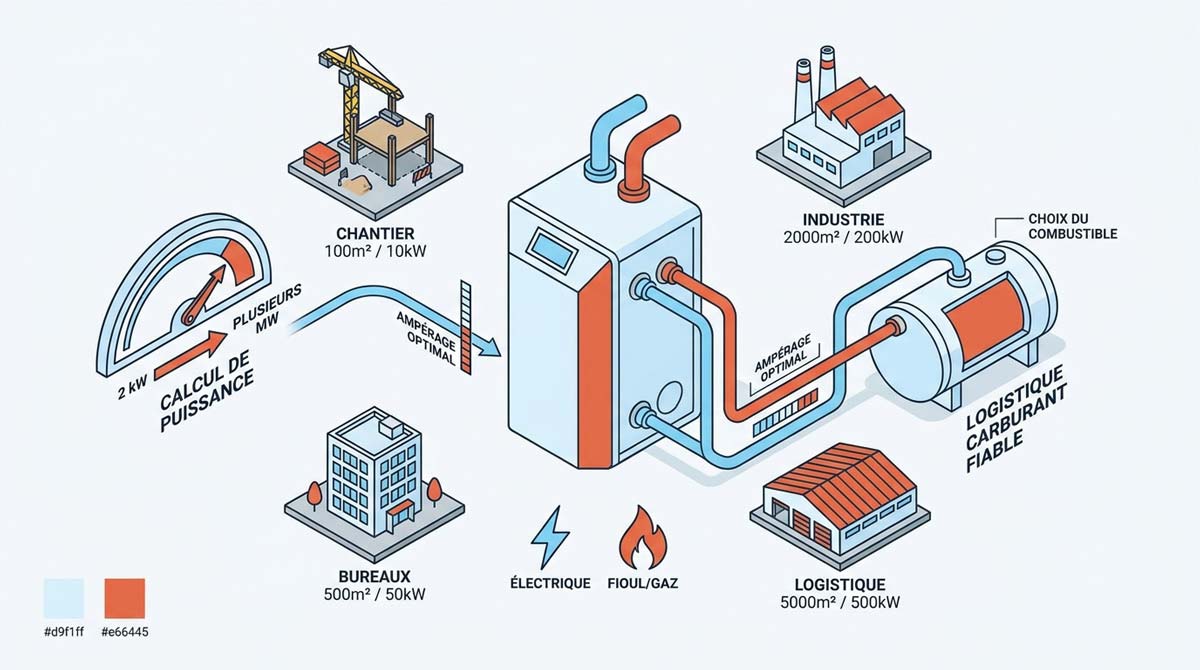
Calculating the required heating capacity in kilowatts
Assessing needs based on volume and insulation is essential. A miscalculation leads to excess consumption. Our experts analyze your actual heat losses. This study ensures a well-matched solution.
Stamex offers a wide range of units. Capacities range from 2 kW to several megawatts. The choice is vast. We cover all your temporary needs.
| Area (m²) | Typical use | Recommended capacity (kW) |
|---|---|---|
| 100m² | Construction site | 15 kW |
| 500m² | Offices | 40 kW |
| 2000m² | Industry | 160 kW |
| 5000m² | Logistics | 400 kW |
Choosing the fuel according to site constraints
Comparing the available energy sources is decisive. Electric units are particularly suited to indoor installations, while oil or gas can meet greater heating needs.
Stamex notably offers rental of mobile gas and oil boilers from 100 to 800 kW for construction sites and industrial applications. Each solution is selected according to the technical and energy constraints of the site.
Fuel logistics require planning. Stamex supplies double-walled tanks. This secures your supply during the rental period. You avoid any service interruption.
Checking the site’s electrical capacity is a priority. High power requires a specific amperage. We validate these points before delivery. This rigor prevents overloads.
Contact our experts for a customized study and request your free quote.
Accessories and services for quick commissioning
Once the capacity has been defined, a successful connection depends on the quality of the accessories used.
The role of high-pressure hoses and connection modules
Corrugated high-pressure hoses are the vital interface of your temporary installation. They make it easy to get around obstacles. The connection is made to your existing flanges or manifolds.
The hydraulic separator hydraulically separates the rented boiler’s circuit from your network. It creates an essential neutral pressure point. This protects the equipment against impurities.
Additional circulation pumps are sometimes needed to overcome significant pressure drops. They guarantee the required flow. We supply the entire hydraulic kit.
Logistics and 24/7 technical support in Belgium
Choosing a local partner is decisive for the continuity of your operations. Based in Châtelet, we operate throughout Belgium. Proximity reduces lead times for transport and installation.
Our specialized technicians carry out a rigorous start-up of each unit. They perform pressure and combustion tests. You receive a turnkey, fully operational installation.
Permanent technical support protects your industrial processes or events against any major unforeseen event.
Responsiveness is nothing without technical expertise; our permanent on-call service ensures your production never stops, whatever the time.
Controlling and securing your temporary heating installation
Finally, operational management and compliance ensure the longevity of the temporary solution.
Remote management and consumption monitoring
Our mobile units are equipped with the XRM remote monitoring system. It lets you track fuel consumption in real time. You avoid running out of fuel unexpectedly during operation.
Automatic control is built into the system. It adjusts the output according to the outdoor temperature. This optimizes your energy costs during the rental period of your heating equipment.
Receive alerts directly on your smartphone. Control becomes simple and transparent.
Compliance with environmental and fire safety standards
Our burners comply with strict environmental standards with reduced NOx emissions. Fire safety is built into every container. We guarantee full compliance with industrial requirements.
We use water softeners to protect your circuits from scaling. Oxidation is thus prevented over the long term. Your existing equipment remains protected throughout the intervention.
The installation always includes:
- Safety valves
- Drip trays
- Filtration
Optimize your heating continuity with our compact units on skids or in containers, delivering even heat distribution as soon as they are connected. Understanding how a temporary replacement boiler works protects your industrial processes and keeps your construction schedules on track. Secure your production right away to avoid any critical operating loss.
FAQ
What is a mobile boiler and how does it work?
A mobile boiler is a self-contained heating unit, pre-assembled on a skid, trailer or in a container, designed for immediate integration into an existing hydraulic network. It produces hot water using an electric heating element or a burner (oil, gas, biogas) and distributes it via a built-in circulator. This plug-and-play system makes it possible to maintain heating or domestic hot water production without structural modifications to your permanent installations.
In which situations is renting a temporary boiler room recommended?
Rental is the answer in the event of critical breakdowns, scheduled maintenance of your permanent equipment or to meet a seasonal capacity need. It is also essential in the construction sector for drying screeds and filling underfloor heating systems, and in industry to secure thermal processes or provide high-pressure cleaning. It is a flexible solution that avoids heavy investment for one-off or urgent needs.
What mobile unit formats are available depending on capacity?
The choice of format depends directly on the required capacity and the site configuration. Skid-mounted units are compact and suited to capacities up to 300 kW. Trailer-mounted boilers offer maximum mobility for emergencies up to 500 kW. For large-scale industrial needs, from 1 MW to 4 MW, we deploy containerized boiler rooms that provide optimal protection and increased robustness for long-term installations.
How do you determine the heating capacity needed for your installation?
Sizing is based on a precise analysis of your heat losses, the volume to be heated and the site’s insulation. Our range extends from 2 kW for residential or drying applications to several megawatts for industrial sites or heating networks. A rigorous calculation in kilowatts makes it possible to optimize energy consumption while maintaining set-point temperatures, even in extreme conditions.
What are the advantages of a mobile electric boiler compared to combustion models?
Electric units stand out for their cost-effective installation and the absence of direct emissions, making them ideal for indoor use or confined areas. They are particularly easy to use, with push-button control, and require no fuel logistics. For higher outdoor capacities, however, oil or gas models remain preferred for their greater energy density.
What is the hydraulic separator for in a rental installation?
The hydraulic separator, or buffer tank, ensures hydraulic independence between the rented boiler’s circuit and your distribution network. It guarantees a constant flow to the heating unit, protecting the equipment against pressure fluctuations and impurities. This component is essential for stabilizing operating cycles, avoiding conflicts between circulators and extending the life of the heating equipment.
How does remote monitoring of rented equipment work?
Our units can be fitted with the XRM remote management system, enabling 24/7 supervision of critical parameters such as temperature, pressure and flow. This system also makes it possible to track fuel consumption in real time to anticipate refills. In the event of an anomaly, automatic alerts are sent by SMS or email, enabling proactive technical intervention before any service interruption.
What services are included in commissioning by Stamex?
We provide a turnkey service including the preliminary technical study, logistics and transport, installation and connection using high-pressure hoses. Our technicians carry out pressure tests, combustion adjustments and full start-up. Permanent technical support and emergency management are included to ensure the continuity of your industrial processes or the comfort of your buildings in Belgium.